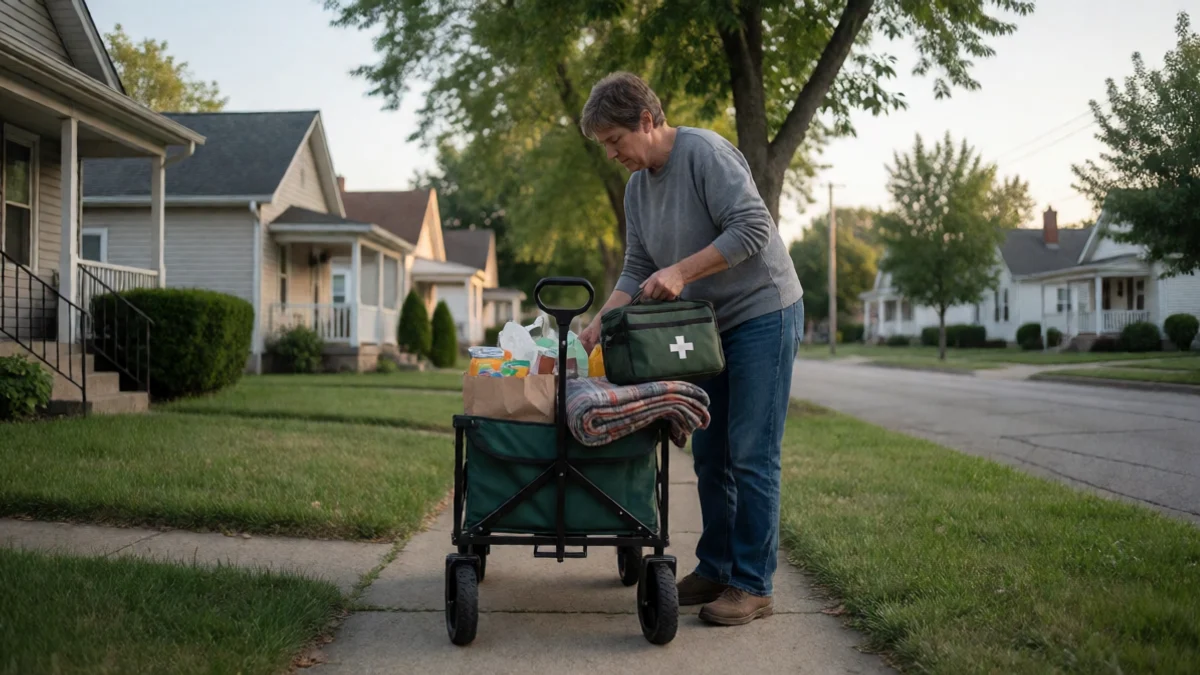
Protect the expenses that keep the household functioning
- Write down the amount and due date for housing, electricity, water, food, medicine, insurance, and transportation required to get to work, school, medical care, or essential appointments.
- Mark any bill that will run out, shut off, lapse, or create an immediate safety problem within the next two weeks. Those are the shortfalls to address first.
- Subtract those essential costs from money already in the account and income expected before the next payday. The remainder, if any, is the honest amount available for unsecured payday debt.
- If food, housing, utilities, medicine, or safety is immediately at risk, use verified crisis or community-assistance resources before sending money to an unsecured payday lender. A lender's due date is urgent, but a shutoff notice or empty refrigerator is the limiting fact.
- Do not take another high-cost loan simply to cover this week's payment without adding its payment date and charge to the same worksheet. Kansas law bars a lender and related interests from using a new payday loan to pay an existing payday loan from that lender or related interests.
Build one record of every debt and scheduled withdrawal
- For each loan, record the original lender, agreement date, amount advanced, stated balance, due date, payment status, and every payment already made.
- Add the name, mailing address, phone number, and reference number of any collector who contacts you. Keep the collector's messages, letters, emails, and call notes in the same record.
- Check the bank account for scheduled debits, pending transactions, recurring transfers, and other automatic payments. Record the date, payee name, and amount shown by the bank.
- Flag any debit you do not recognize or any amount that differs from what you authorized. Save screenshots, statements, and notices, then contact the bank promptly.
- Keep a separate line for amounts you dispute or cannot match to an agreement. An itemized record gives you something concrete to ask about instead of negotiating from a guessed balance.
- A revoked preauthorized electronic debit or a bank stop-payment order can stop a payment channel, but it does not itself cancel the underlying debt. Treat the account action and the debt response as two separate tasks.
Contact lenders and screen outside help
- Send each verified lender a short written request: “Please provide an itemized current balance, the payment due date, the status of any scheduled debit, and the arrangements currently available on this account.” Save a copy and note the date sent.
- For a Kansas payday loan made on or after January 1, 2025, ask whether you are eligible for the statutory extended payment plan before the close of the last business day before the due date. An eligible borrower may request this plan once in a 12-month period; it uses at least four substantially equal installments and adds no extra fee while the borrower complies.
- Use the loan record to check obvious numbers. A Kansas payday cash advance cannot exceed $500, its finance charge cannot exceed 15% of the amount advanced, and its term must run from 7 to 30 days. On a $300 advance, the maximum finance charge is $45, for $345 total repayment.
- If a collector rather than the original lender contacts you, record who is collecting before discussing payment. The Consumer Financial Protection Bureau has guidance on checking a debt and responding to debt collectors; collection protections can depend on who is collecting.
- Use nonprofit credit counseling for budgeting and debt-management-plan discussions only after checking the counselor's credentials, fees, and the work offered. The National Foundation for Credit Counseling provides a nonprofit counselor locator.
- Contact Kansas Legal Services promptly if court papers, a garnishment issue, or another legal deadline has arrived. Do not wait for a lender's negotiation reply when a court deadline is already running.
- Use the Office of the State Bank Commissioner of Kansas for concerns involving regulated lenders, and the Kansas Attorney General Complaint Center or the CFPB to submit a consumer complaint about a business problem. A complaint channel is not a payment plan, so keep the lender contact and calendar moving.
- Walk away from a debt-relief service that demands a large upfront fee or guarantees it will eliminate the debt. Those promises are not a substitute for identifying the provider, its fees, and its actual work.
Turning the records into a two-to-four-week calendar
- Make a calendar covering the next 14 to 28 days. Enter rent, utilities, insurance, medicine, food money, transportation costs, and every known payday-loan due date first.
- Add each expected bank debit and schedule an account check before it posts. Put disputed or unauthorized activity in a separate, visible entry with the bank-contact task beside it.
- Set a follow-up date three business days after each written lender request. On that date, record the response, the offered terms, or the fact that no response arrived.
- Add counseling, legal-aid, or complaint appointments with the documents to bring: loan agreements, bank statements, payment receipts, collector notices, and your debt record.
- Put any court date, response deadline, or legal notice at the top of the calendar and assign it to qualified legal help immediately. It outranks ordinary lender follow-up.
- Your short-term plan is complete when every essential bill, debt, expected debit, written request, appointment, and legal deadline has a date and a next action. That is enough structure to stop reacting blind.
Sources for this guide
- What are the costs and fees for a payday loan? — Consumer Financial Protection Bureau
- Consumer Financial Protection Bureau — official information — Consumer Financial Protection Bureau
- Should I get a payday loan if I need money now? — Consumer Financial Protection Bureau