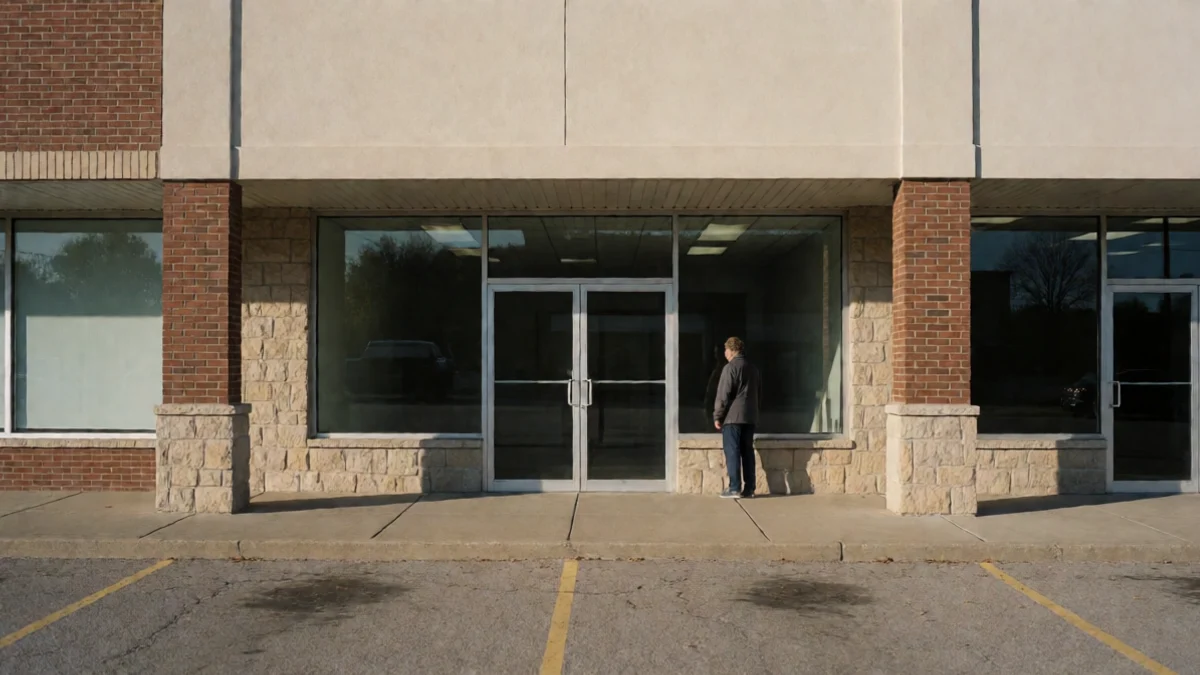
The “local” signals that do not prove a Leawood storefront exists
A map pin, a local phone number, a Leawood-focused landing page, or a distance label such as “nearby” does not establish that a lender has a consumer-facing office there. Search snippets and user-edited map records can remain visible after an address changes. A local number can route calls to a remote operation, and a mailing address does not by itself show that borrowers can apply or receive service at that location.
Treat the result as a claim with separate parts: whether a physical office exists, whether the named business is the entity making the loan, and whether the application takes place in person, remotely, through an out-of-state operation, or through an intermediary. Those are different facts. A listing becomes useful only when its address, entity name, and application channel line up.
The evidence stack for a location claim
- Save the listing claim first: capture the displayed business name, street address, phone number, distance label, and the link it presents. That preserves what the search result actually represented before a redirect or later edit changes it.
- Check the street address on the business’s official location page. An official page is stronger evidence of a claimed location than a map snippet, but it still needs to indicate that the address is a consumer-facing office rather than a mailing address.
- Match the lending entity named in the application terms or disclosures against current Kansas lender or license records. Match the actual entity in the proposed transaction, not merely the trade name displayed in an advertisement.
- Read the terms or disclosures for the company identified as the lender. The lender name, address, and application domain should fit the listing. A different entity name or an unexplained redirect leaves the local claim incomplete.
- Ask directly whether the application is completed in person at the stated address or remotely. Keep a record of the response, but do not treat a telephone answer as the only evidence.
Classify what the search result actually leads to
| Channel Label | Observable Indicators | Handling |
|---|---|---|
| Storefront | The official location information identifies the displayed address, the lending entity matches the relevant Kansas record, and the business confirms that consumers apply or receive service at that address. | Treat the location claim as corroborated, then review the loan disclosures for the entity that would make the loan. |
| Remote | The listing points to an online application, and the lender disclosures identify a lending entity even though the Leawood address does not function as an application office. | Treat it as a remote application channel rather than a local storefront. |
| Out-of-state | The application or disclosures identify a transacting entity outside Kansas, or the listed local address does not correspond to the entity making the loan. | Record the actual lender and application destination instead of relying on the nearby map result. |
| Intermediary | The listing collects an inquiry, redirects to another site, or does not identify the lender that would make the loan. | Treat the result as an advertising or lead channel until lender disclosures identify the transacting entity. |
| Unresolved | The address, business name, lender disclosures, or application destination conflict, or key information is absent. |
What unresolved evidence means for the application
An entity-name conflict matters when the map listing promotes one business while the application terms identify another. So does an address conflict between the listing and the lender’s own materials. Those gaps prevent a borrower from connecting the local advertisement to the company that would receive the application and make the loan.
A redirected application domain is equally material when it lands on a site that does not clearly identify the lender. Absent lender disclosures leave the transaction channel unresolved. Stop before entering a Social Security number, bank-account information, debit-card details, income records, or login credentials until the lending entity and application channel are clear.
Stop, preserve, or report the listing
- Stop at the listing when the entity, address, or application destination remains unresolved. Do not submit sensitive information merely because the result appears near Leawood.
- Preserve the evidence: save screenshots of the map result, landing page, address, phone number, redirect path, and lender disclosures. Include the date shown on your device.
- Use the platform’s correction process when a map entry presents an inaccurate address, location status, or business identity.
- Direct licensing questions about the named lender to the relevant Kansas financial regulator, using the entity name shown in the proposed transaction.
- Use an official consumer complaint channel when a listing materially misrepresents the entity that would conduct the transaction. A misleading listing is a reporting issue; the available information alone does not establish fraud.
Sources for this guide
- What should I consider if I'm thinking about getting a payday loan online? — Consumer Financial Protection Bureau
- Consumer FAQs — Kansas Office of the State Bank Commissioner
- K.S.A. 16a-2-404 — Payday loans; finance charges; rights and restrictions — Kansas Office of Revisor of Statutes